So this was on the 7th day of their spontaneous tea ritual. Following up on some earlier snippet or tidbit, she said, “Tell me what you remember about the story of the, what was it, Chinese man whose horse, something or other...?”
He struggled a bit to remember, but because it was her asking, tried his best, as two steps at a time (that’s one for each of them) they continued walking, along the crushed limestone path that would eventually lead to the boardwalk that would eventually lead to the marsh that would eventually lead to the beach.
“So, let’s see, it was something like... the old man told his neighbor that his horse died, and the neighbor was like ‘Oh my god, that’s bad!’ And the old man was like, ‘Maybe.’ Then it turned out that there was some reason the horse dying turned out to be a good thing, and—”
“What? That’s horrible! How can the horse dying be a good thing? That poor horse.”
“Yeah, I know, right? It’s like, from whose point of view? That’s why I kind of hate old parable-type folk tales and shit. People seem to love to trot (haha get it) them out as if they have the answer, like they’re a pill of wisdom you can just gulp down and get on with being productive and superior.”
“Well, I suppose a chicken dying isn’t a good thing either, but we still eat them. And sometimes they taste good.”
“Exactly. Anyway, yeah, there was like this whole chain of events. The dead horse meant his son couldn’t go to war (good? maybe), but then something bad (maybe) happened because of that, but then that led to something (maybe) good, and so on and so on. It reminds me of that writing formula that says if all you have is “and then,” it gets boring; instead you need ‘this happened, BUT this happened, THEREFORE this happened....’”
“Which when you think about it isn’t really fundamentally different from ‘this and then this and then this’ except it kind of burns in a particular framework or point of view.”
“Yeah, it kind of seems like the old man is saying ‘and then’ is all we ever really get.”
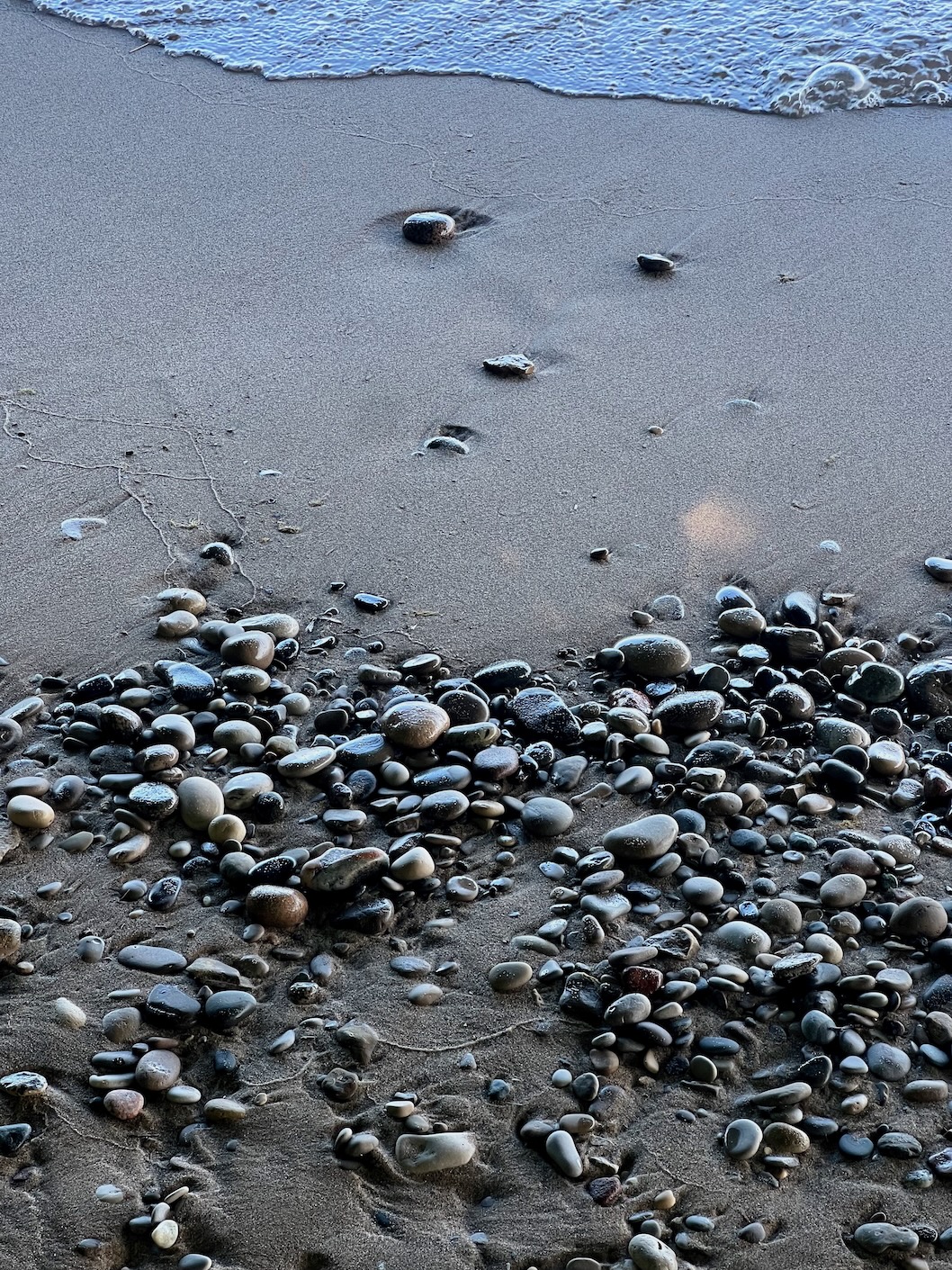
And then they got to where the crushed limestone path becomes the boardwalk. And then they stepped up on the boardwalk, leaving the scuff-scuff-scuff of each step behind in exchange for the pad-pad-pad of each step, the hollow knock of frogs’ leaps off the deck and the juicy kiss of the waters receiving them. And then the boardwalk led them on through the marsh with the bludgeoning sun softened by spring’s first forays into poetry, and then the beach appeared spread out before them, the wide high dome of the lake pulsing beyond forever. And then they found a bed of rocks to sit on and then she got out the tea things and then he started looking around for firewood and then the storm came.